

Scientists seek precise control in polymer synthesis. The epoxide monomer 1,2-EPOXYTETRADECANE CAS NO.3234-28-4 provides a direct solution. This key pharmaceutical intermediate enables the creation of polymers with predictable molecular weights and narrow polydispersity. Its use is vital in developing polymeric prodrugs for advanced cancer therapies, solving critical industry challenges.
Key Takeaways
- 1,2-EPOXYTETRADECANE helps make polymers with exact sizes and shapes. This control is important for making new materials.
- High purity 1,2-EPOXYTETRADECANE is key for good reactions. It stops problems that can hurt the final product.
- This chemical is a base for making smart polymers. These polymers can deliver medicine to specific places in the body.
Achieving Synthesis Control with 1,2-EPOXYTETRADECANE

Precise control over a polymer’s final properties begins with the monomer. 1,2-EPOXYTETRADECANE provides chemists with the structural reliability needed to direct polymerization reactions with exceptional accuracy. This control is the foundation for creating high-performance materials.
Mastering Molecular Weight and Polydispersity
Scientists can dictate a polymer’s molecular weight and uniformity using 1,2-EPOXYTETRADECANE. The monomer’s reactive oxirane ring is central to this process. It participates in predictable ring-opening reactions. For example, researchers use a straightforward one-step reaction where amino groups on a polymer backbone react with the epoxide. This process modifies the polymer’s side chains, creating new materials with distinct properties for applications like mRNA delivery. This controlled reaction mechanism ensures that the polymer chains grow to a desired length, resulting in a predictable molecular weight and a narrow polydispersity index (PDI).
The choice of catalyst is also vital for achieving this level of control. Specific catalysts work effectively with 1,2-EPOXYTETRADECANE to guide the polymerization.
- Double metal cyanide (DMC) catalysts are highly effective for this purpose.
- Scientists often use complexing agents (CAs) with these catalysts to enhance performance.
- Common CAs include tert-butyl alcohol (TBA), ketones, ethers, and amides.
This combination of a reliable monomer and specialized catalysts gives researchers a powerful toolkit for polymer design.
Ensuring High Purity and Reaction Efficiency
The success of a polymerization reaction depends heavily on the purity of the starting materials. Commercial-grade 1,2-EPOXYTETRADECANE is available in high-purity levels, which is essential for consistent and efficient synthesis.
| Purity Level |
|---|
| 95% |
| 98% |
Why is this purity so important? Impurities, even in trace amounts, can act as poisons to the catalyst system.
Impurities like other epoxides can interact directly with the catalyst. This interaction forms stable but inactive complexes. These complexes reduce the number of available active sites for polymerization. This “poisoning effect” lowers catalytic activity and can drastically alter the final polymer’s molecular weight, melt flow, and mechanical strength.
Even tiny concentrations of impurities can lead to significant negative impacts. They can increase the thermal degradation of the final polymer or cause shifts in molecular weight distribution. Using a high-purity intermediate like 1,2-EPOXYTETRADECANE (CAS 3234-28-4) eliminates these variables. It ensures that the reaction proceeds as planned, maximizing catalytic efficiency and yielding a polymer with the intended structure and properties. This reliability is critical for developing materials for demanding pharmaceutical and industrial applications.
A Versatile Pharmaceutical Intermediate for Advanced Polymers
1,2-EPOXYTETRADECANE moves beyond being a simple monomer. It serves as a highly adaptable platform for creating specialized polymers. Its chemical structure is the key to unlocking a wide range of advanced material properties. This versatility makes it an essential pharmaceutical intermediate for next-generation applications.
A Scaffold for Functional Group Attachment
Think of 1,2-EPOXYTETRADECANE as a foundational scaffold. Scientists can build upon its simple C14H28O structure by attaching various chemical groups, known as functional groups. The monomer’s reactive oxirane ring readily opens. This reaction creates a site for new molecules to bond to the polymer chain. This process allows chemists to precisely engineer the final polymer’s surface and bulk properties.
Recent research highlights the value of creating such reactive epoxides from simpler molecules. These epoxides are crucial building blocks for many industries.
This work shows for the first time the ability of some UPOs to oxygenate long-chain (C12:1–C20:1) terminal alkenes, yielding reactive epoxides that are of interest as building blocks in the pharmaceutical, flavoring, and polymer sectors.
Scientific analysis confirms the successful synthesis of 1,2-EPOXYTETRADECANE from precursor molecules. This makes it a reliable and accessible pharmaceutical intermediate.
- Mass spectra of 1,2-epoxytetradecane were obtained from reactions of 1-tetradecene with rCciUPO.
- GC-MS analysis of 1-tetradecene reactions identified 1,2-epoxytetradecane as a main product.
Attaching different functional groups to this scaffold dramatically changes a polymer’s behavior. These changes are critical for medical and biological applications.
- Functional groups can control how cells first attach to and grow on a polymer surface.
- The presence of certain groups, like carboxyl groups, helps surfaces interact better with cells.
- They are essential for a polymer’s biocompatibility and how it biodegrades in the body.
- Chemists can even change a polymer’s solubility. Water-insoluble polymers can become water-soluble by modifying their side-chain functional groups.
Synthesizing Smart Polymers for Drug Delivery
One of the most exciting uses for these customized polymers is in creating “smart” drug delivery systems. These advanced polymers can respond to specific triggers in the body. This capability allows for the targeted release of medicine. Using a versatile pharmaceutical intermediate like 1,2-EPOXYTETRADECANE is fundamental to designing these intelligent materials.
Many smart polymers are designed to be pH-sensitive. They react to changes in acidity. This is especially useful for targeting cancer cells, as the environment around solid tumors is often more acidic than healthy tissue.
- These systems can be engineered to respond to pH changes in specific organs or diseased areas.
- pH-controlled release helps limit the body’s exposure to toxic chemotherapy drugs.
- The polymer’s structure changes in acidic conditions, causing it to release its drug payload precisely where it is needed.
- This change happens because acidic or basic groups in the polymer chain gain or lose protons, altering the polymer’s shape or solubility.
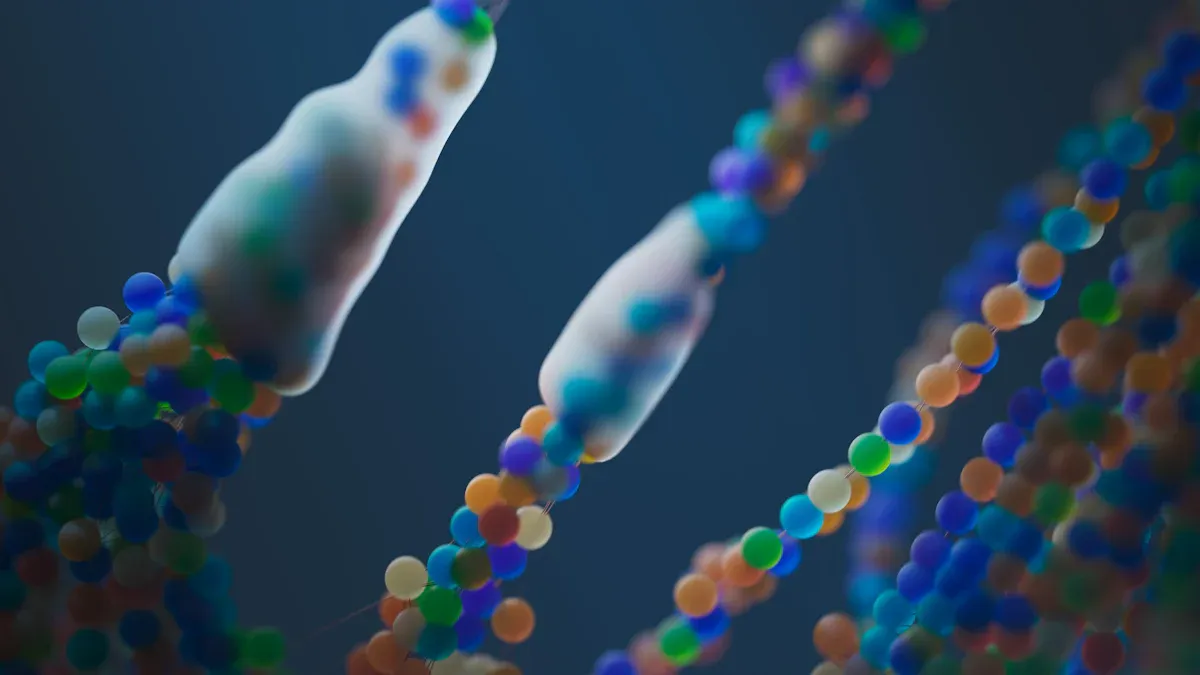
Researchers have already built successful drug delivery systems using this approach. For example, scientists used 1,2-epoxytetradecane to construct a cationic Amphiphilic Dendrimer Engineered Nanocarrier System (ADENS). This advanced nanocarrier has a unique hollow core/shell structure. It can carry both water-soluble and water-insoluble drugs, like siRNA and paclitaxel, at the same time. The resulting system showed excellent stability, controlled release, and high biocompatibility. This case demonstrates how a foundational pharmaceutical intermediate enables the creation of complex, life-saving technologies.
1,2-EPOXYTETRADECANE is a foundational solution for advanced polymer synthesis. This pharmaceutical intermediate enables success, leading to outcomes like effective tumor inhibition and sustained drug release. Adopting this high-purity compound is a direct path to creating next-generation materials for expanding global markets in medicine and material science.
Post time: Dec-16-2025


